Document
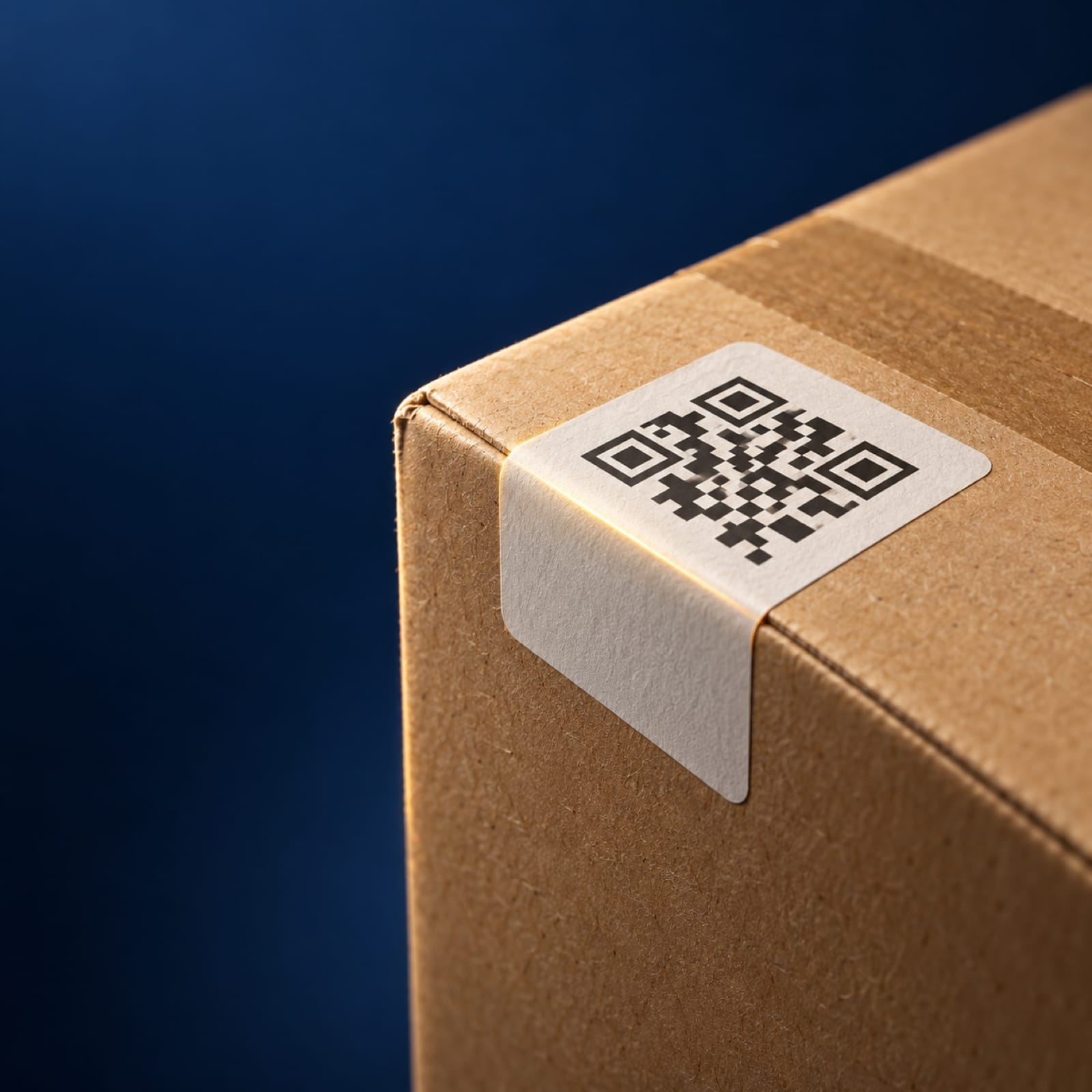
The PID, printed or stuck on.
A QR with the resolution URL and the ID as text on one line. The registry guarantees it: random, with check symbols, collision-free.
If it fails: If it is lost or copied, the other two routes come into play.
The open SSCC
One number for every unit in transit, free and forever, bound to the object by its physical signature and with a sealed history anyone can verify. No permission, no fee and no personal data.
This is a PID PID-1-7QC3-Z79D-G6RZ-8E
€0 to enrol and resolve
Enrolling a unit and resolving its PID costs nobody anything, forever. No account and no fee.
60 random bits
Nothing inside: no date, no issuer, no sequence. Nobody can enumerate the database or infer volumes.
0 personal data
The registry describes units, not people. The label content (names, addresses, phone numbers) never goes in.
1 daily Bitcoin anchor
Every UTC day is closed into a Merkle tree, signed and anchored with OpenTimestamps. No tokens, no wallets.
Check it now
Format and check symbols are verified in your browser, without sending anything. If it is valid, we ask the registry whether it exists and what state it is in.
Nothing you type here is stored. The format check never leaves your browser.
What travels
A unit in transit has no permanent issuer, changes state and hands along the way and lives from hours to months. The parcel is the first profile; next come the loaded pallet, the container load, the tote, the mail bag and the suitcase, and the art crate.
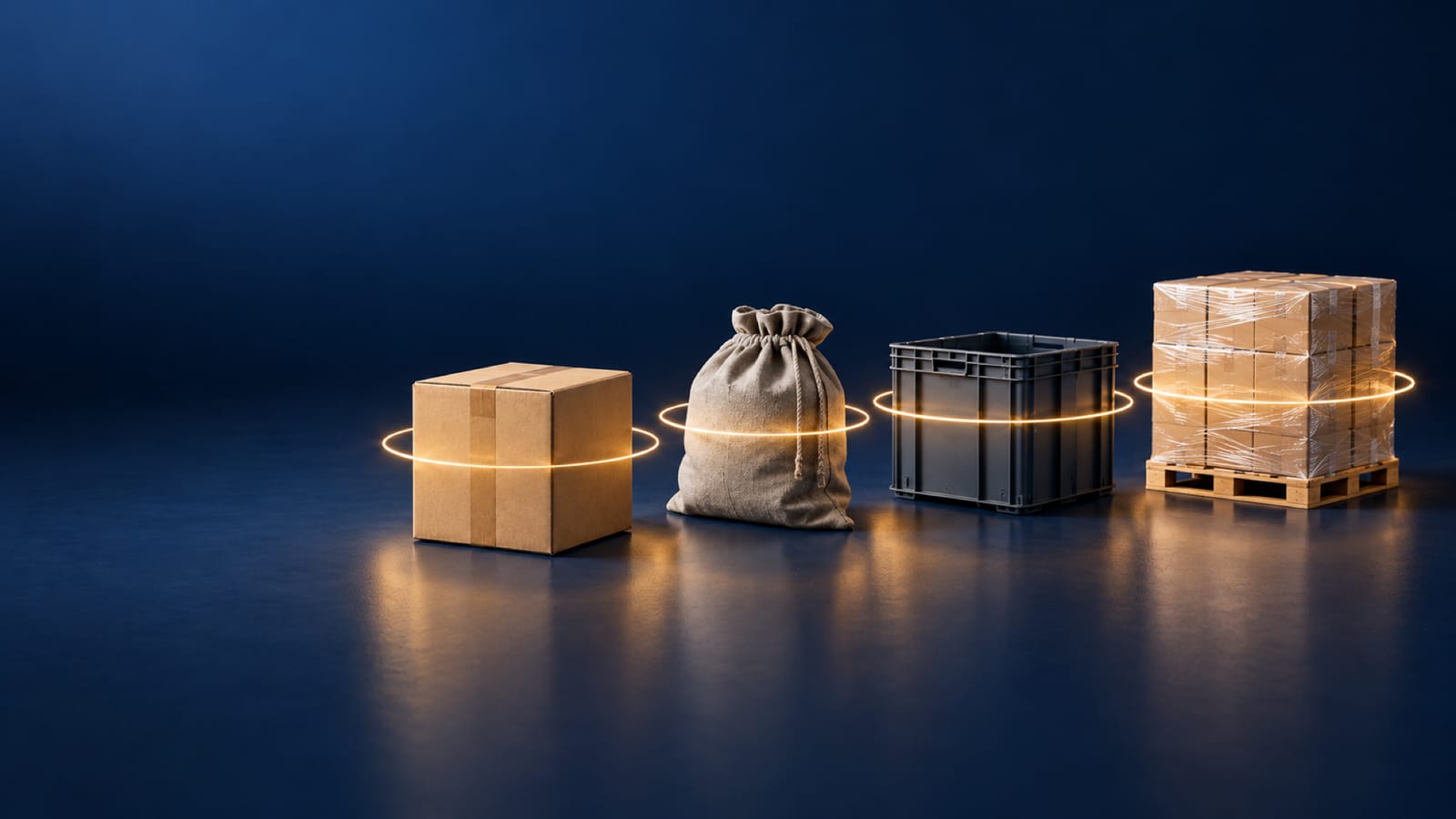
parcelBox, envelope or closed package. Full profile, levels 0 to 3.
pallet_loadThe stacked, wrapped load, not the wooden pallet.
container_loadWhat travels inside; the container is context.
toteTotes, cages, roll containers and returnable packaging.
bagThe bag tag is per trip; the suitcase is not.
crateArt, instruments, machinery.
The shipping container (BIC code) and the vehicle (VIN, plate) already have an issuer and a registry: they get no PID. They come in as context, as a link or as a custodian. What gets a PID and what does not
The three routes to uniqueness
A person has a document and a biometric. A unit receives its document at enrolment, is recognised by its physical signature and is told apart by its history. No route is enough alone; together they are more than person-based KYC has, because the sealed history does not exist there.
Document
A QR with the resolution URL and the ID as text on one line. The registry guarantees it: random, with check symbols, collision-free.
If it fails: If it is lost or copied, the other two routes come into play.
Biometrics
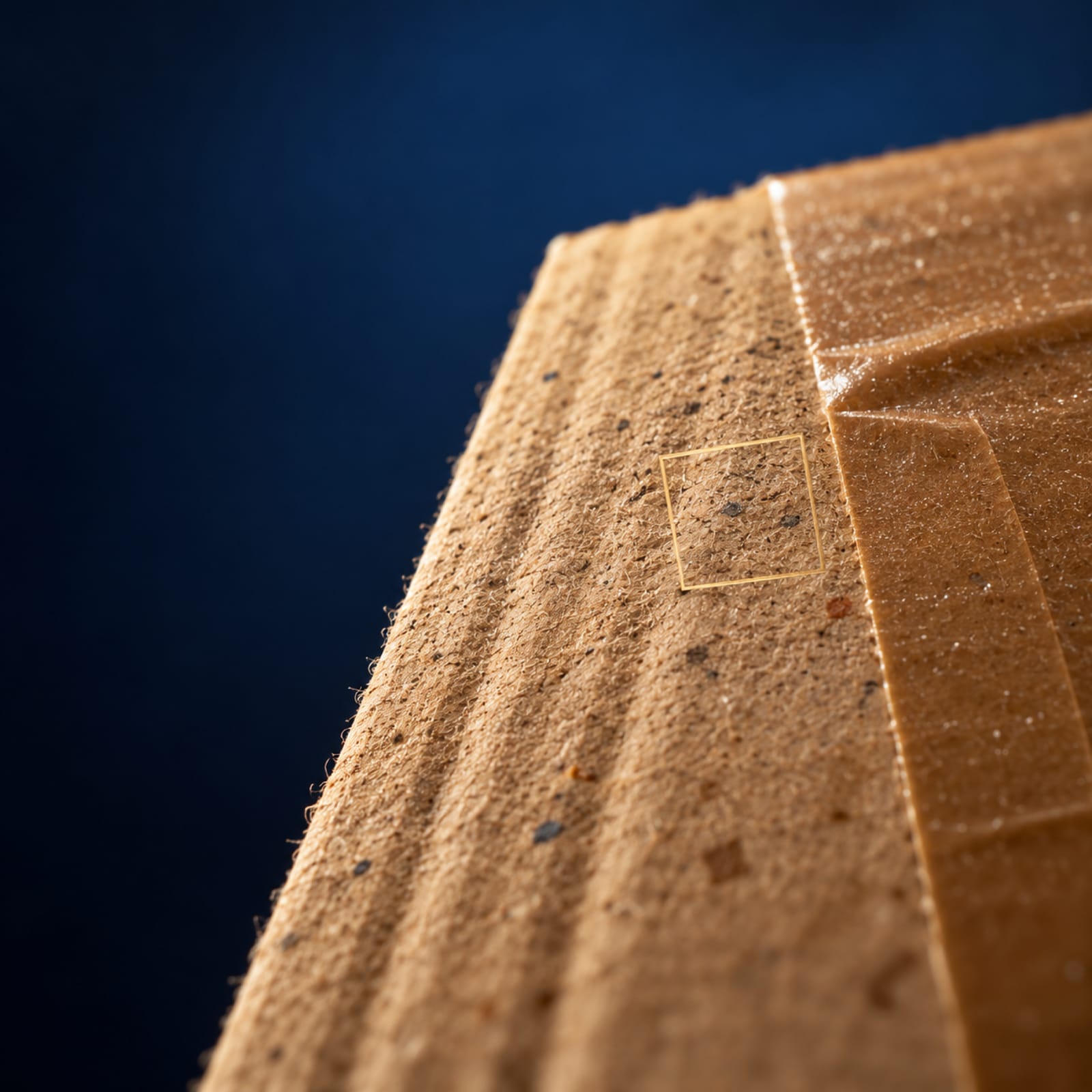
Geometry, weight, 3D shape, cardboard texture in fixed patches, tape, label layout (never its content), appearance and damage. Kept in a sealed record: its birth certificate.
If it fails: If someone copies the label onto another box, the signature does not match.

History
Every new capture of the same unit becomes a chained record. Opening, consolidating or repacking creates a new linked PID: the lineage.
If it fails: Two identical boxes cannot have the same history.
The open SSCC
The SSCC is the logistics number of a shipping unit. It is useful and will stay useful. But without a GS1 prefix you cannot have one, and with one you still cannot bind it to the physical box. PARCID covers both.
| Aspect | SSCC (GS1) | PID (PARCID) |
|---|---|---|
| What it is | An 18-digit number for a logistic unit | An opaque identifier for a physical unit in transit |
| What it costs | Needs a GS1 company prefix, with a fee | Free, for anyone, no account |
| What is inside | The issuer’s prefix and a serial: it can be enumerated | 60 random bits: it reveals nothing |
| Lifetime | Can be reused after a period | Perpetual: never reassigned |
| Registry | No public registry resolves it | Public resolution by web, QR and API |
| Bond to the object | None: the label can be stuck on another box | Physical signature sealed at enrolment |
| History | Outside the number | Sightings and lineage, sealed and anchored in Bitcoin |
If your unit already carries an SSCC, enrol it as a link: it comes in as a first-class key and resolves at /00/{SSCC}, with the physical signature and the history the number lacks. The PID sits underneath as the perpetual key. If you have no GS1 prefix, the PID gives you a unique, perpetual, resolvable number for every unit, for free.
PARCID does not issue SSCCs and the PID is not a GS1 key.
Model
Enrolling a unit and resolving its PID costs nobody anything, forever. Claiming “this is the same unit”, “this capture is real and current” or “this is how it was at that time” are services provided by operators.

A common base
Tracking says where it goes. The SSCC says which logistic unit it is and which shipment it travels in. PARCID says which physical unit it is, what state it was in and whether it is still the same. The three are linked; none replaces the others.
Stations, phones with the SDK, third-party devices and the API. Every enrolment says how it was captured and at what assurance level.
A publicly linked SSCC resolves at /00/{SSCC} to its PIDs, stating whether an identified operator linked it or it is self-declared. The PID is not a GS1 key and does not claim to be one.
The forwarder enrols and its customer resolves; the shop enrols and the carrier compares. One uses it and the other sees it.
Guarantees
Public format, resolution and export. The resolver, the API and the verifier are published under Apache-2.0 so anyone can run a mirror.
The registry describes units, not people. Evidence that might contain personal data is encrypted and read only by whoever holds the unit’s key.
Every record enters an append-only ledger; each day closes into a Merkle tree, a signed and chained statement and a Bitcoin anchor. Your browser can check all of it.
The operator commits to hand the registry over to a non-profit entity. If it stops publishing the daily anchor for 90 days, any mirror may carry on.
Who it is for
Receipt with a record, consolidation with lineage, and a PID the end customer can resolve.
Loaded pallets and container loads with an identifier that survives changes of label, carrier and warehouse.
Enrol what goes out so it can be compared with what comes back, with or without a GS1 prefix.
Mail bags and totes with a history, sightings at every handover and, later, unlabelled items.
The bag tag changes on every trip; the suitcase can keep its PID.
Liveness proofs and explained comparisons for claims with doubtful images.
Free API with no account, open specification, public-domain verifier and Apache-2.0 code.
Give their own shipment an identity, for free, and check any PID they receive.
The free API needs no account to enrol or resolve. The specification is public and open for comments.